10 Yard Dumpster
Smaller cleanouts, garage projects, and light renovation debris.
Compare common dumpster sizes for cleanouts, renovation, construction, roofing, yard work, and other debris removal projects at homes and jobsites.
Get a Quote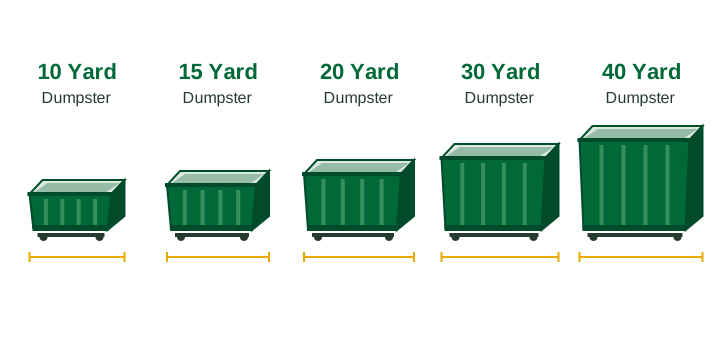
Compare the five common dumpster sizes used across different cleanup, renovation, and construction projects.
Smaller cleanouts, garage projects, and light renovation debris.
Medium cleanouts, remodeling, and property cleanup.
Home renovation, moving cleanup, roofing, and general projects.
Larger renovations, construction cleanup, and demolition work.
Larger construction and high-volume cleanup projects.
The right dumpster size depends on your project type, the amount and type of debris, and the space available for placement.
Start with the kind of work you are doing, such as a home cleanout, renovation, roofing project, construction job, yard cleanup, or moving project.
Estimate how much material the project may generate so you can compare smaller and larger dumpster options more realistically.
Consider what you will be loading, since different project materials may affect which dumpster options and disposal requirements are appropriate.
Think about where the dumpster can be placed and whether the driveway, property, or jobsite has enough safe and practical access.
Consider when your project will start and how long cleanup may take. Discuss delivery and pickup timing when choosing a dumpster for your work.
Get answers to common questions about comparing dumpster sizes and choosing an option for your project.
The appropriate size depends on your project type, approximate debris amount, the material being removed, and available placement space. Comparing the 10, 15, 20, 30, and 40 yard options on this page can help narrow your choice. Discuss your project details before selecting an option, since no single size fits every cleanup.
Home cleanout needs vary with the amount and type of material you plan to remove. A smaller cleanup may call for a smaller dumpster, while a whole-home or higher-volume cleanout may need a larger option. Estimate your debris volume and consider placement space before choosing among residential dumpster sizes.
Renovation projects can generate very different amounts of debris. A small bathroom update and a larger remodeling project may have different requirements, depending on the work involved and materials removed. Consider the project scope, debris type, and expected volume together when comparing options, rather than choosing from the room count alone.
Roofing dumpster selection depends on the scope of the project, the material being removed, and the applicable disposal requirements. Roofing debris can be heavy, so visual volume alone may not be enough to guide your choice. Discuss the project details and material type when selecting a dumpster for roofing work.
Compare your project scope, approximate debris amount, material type, and available placement space. Choosing based only on how large a container looks is not enough. Think about the full cleanup, including material you expect to remove later, and discuss those details when deciding between smaller and larger options.
Before choosing, identify your project type, expected debris, material type, and the area available for placement. Also discuss any project-specific disposal requirements, especially if you are unsure whether a material can be loaded. Having these details ready can make it easier to compare dumpster rental sizes and explain your needs.